
 Insights
 White Papers
 Ecosystem Radar
article
Thibaut Taittinger, our 2025 Ecosystem Hero. Building the kind of place where tech communities actually grow
Some people build companies. Others build conditions.
That difference matters. Because behind every strong tech ecosystem, there are not only founders raising rounds, engineers shipping products, or investors backing ambition. There are also the people who make the work possible in the first place. The ones who create the spaces, the rhythm, the connections, the sense that something is happening here, and that you want to be part of it.
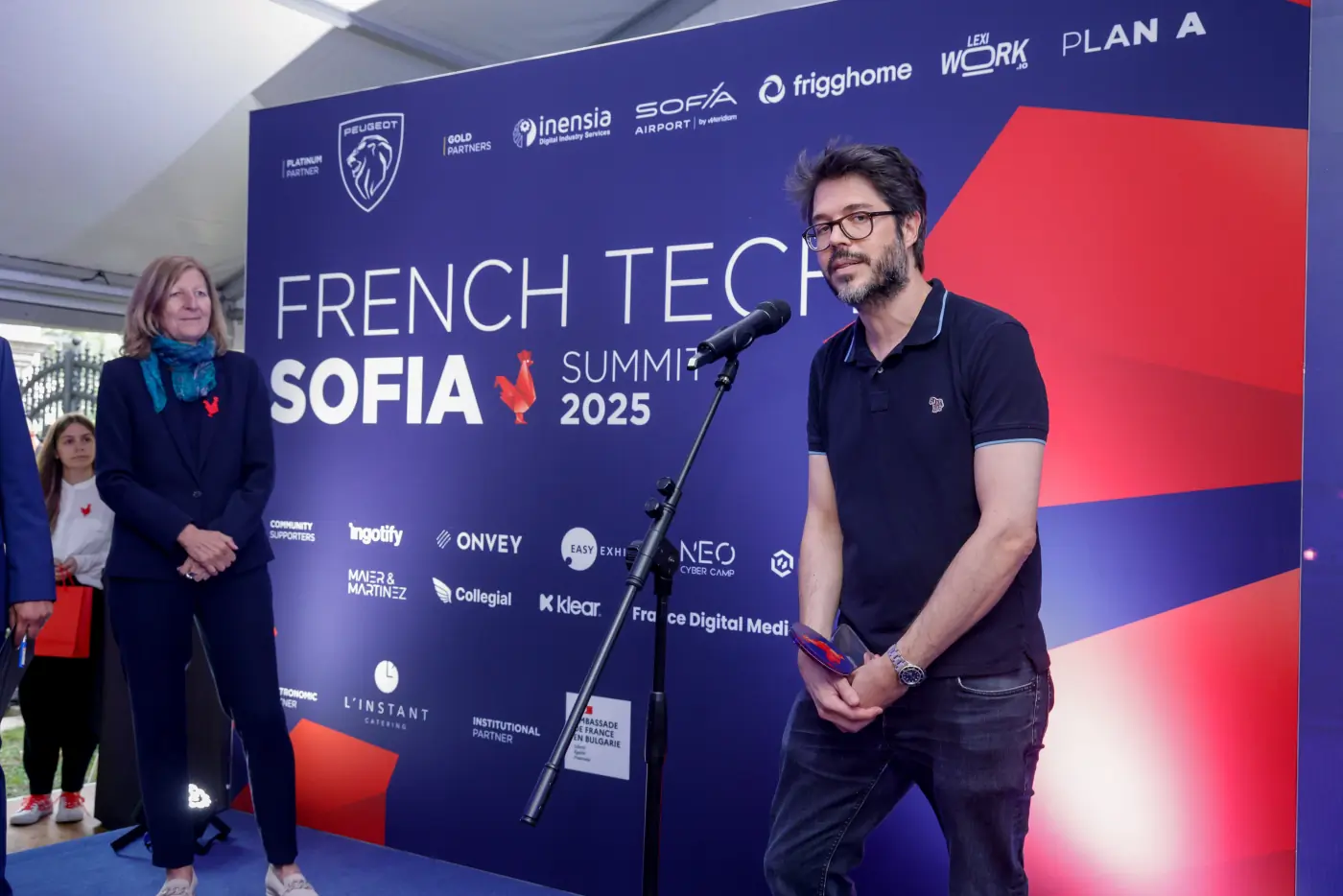
This is a big part of why, during the French Tech Sofia Flagship Summit, we were proud to honor Thibaut Taittinger, Founder and CEO of Puzl CowOrKing, with the Ecosystem Hero award. The award was presented as part of our flagship gathering, held on May 29, 2025, a moment designed to celebrate individuals helping shape the Bulgarian tech landscape and its wider regional influence. Thibaut was recognized there as Ecosystem Hero, alongside other figures whose work is pushing the ecosystem forward in different ways.
The title fits him unusually well.
Because what Thibaut has built with Puzl isn’t simply a coworking brand, and certainly not just a real-estate story dressed in startup language. At its core, Puzl was created with a very specific mission: to help IT humans and teams grow in a productive environment. The wording is simple, almost disarmingly so, and that is probably why it says so much. It doesn’t talk about disruption. It doesn’t hide behind abstraction. It starts with humans, teams, growth, and the environment needed to make all three work together. That mission is explicit in Puzl’s own presentation, where the company describes its role as giving tech people a productive place to work from, within a supportive community of like-minded builders.
That clarity tells you something about the founder.
Thibaut is one of those people whose work reveals his philosophy long before he explains it. His background sits at an interesting intersection. He has been described as a French entrepreneur with more than 15 years of experience spanning property development and IT startups, and as someone who has long been deeply connected to Central and Eastern Europe. That combination matters because Puzl only makes full sense when you understand both sides of it. You need operational discipline, physical space intelligence, and a real understanding of what tech teams need when they are trying to do hard things well.
In practice, that has meant building environments designed for focus, comfort, and useful interaction. Puzl positions itself as coworking built by and for IT professionals, offering shared offices, serviced offices, community support, and curated events relevant to the tech community. It has grown into a recognizable name in Sofia and beyond, with an expansion into Budapest as well, and its own materials repeatedly insist on a point many founders quietly know to be true: a workspace isn’t neutral. It can drain a team, scatter attention, and flatten energy, or it can do the opposite. It can help people think clearly, meet the right peers, and stay in motion.
This is where Thibaut’s impact becomes larger than his company.
Healthy ecosystems don’t emerge from slogans. They emerge from density. From trust. From repeated encounters between ambitious people who are serious about what they do. They emerge when founders can bump into operators, when early teams can feel part of something bigger than their own runway, when international talent lands in Sofia and quickly understands that this city has depth, standards, and community.
Places like Puzl help create that density.
And in Bulgaria, that matters enormously. Sofia has spent years proving that it can produce talent, technical excellence, and globally relevant companies. But ecosystems don’t become durable just because good companies exist. They become durable when there is infrastructure around them, and not only legal or financial infrastructure. Human infrastructure. Community infrastructure. The kind that makes people stay longer, collaborate faster, and imagine bigger. Puzl has played that role by creating environments where freelancers, startups, and scaleups can thrive, and by curating events and partnerships specifically aimed at the IT community rather than treating community as a decorative extra.
That contribution is also regional.
Puzl describes itself as the best IT coworking space in Central and Eastern Europe, and whether one reads that as ambition, positioning, or both, it reflects something real about the company’s relevance in the CEE conversation. Bulgaria’s ecosystem doesn’t grow in isolation. It grows through bridges, circulation, shared standards, and the confidence that companies here can belong to a larger regional story. Thibaut’s work has helped make Sofia more legible and more attractive to international teams, while also giving local builders a place that feels intentionally designed around their needs rather than adapted to them as an afterthought.
There is also something deeply human in the way this mission is framed.
Puzl talks about "IT humans," which isn’t the sort of phrase a committee would invent. It’s slightly unusual, memorable, and honest. It suggests a worldview in which people in tech aren’t reduced to headcount, functions, or LinkedIn labels. They are people trying to build, solve, collaborate, and grow. That tone carries through the company’s broader voice, where productivity and professionalism sit alongside warmth, humor, and a real sense of belonging. Read closely, and you get the impression that Thibaut understands a truth many workplaces still miss: people do better work when they are respected not just as workers, but as humans with energy, ambition, limits, and a need for meaningful context.
Leadership can take many forms in an ecosystem. Sometimes it’s loud. Sometimes it’s highly visible. Sometimes it comes with titles that sound important. And sometimes it looks like showing up for years and building something useful enough that hundreds of others can do their best work because it exists.
That, to us, is ecosystem leadership too.
Honoring Thibaut Taittinger as Ecosystem Hero was our way of recognizing a founder whose impact radiates outward. From company to community. From workspace to ecosystem. From daily operations to long-term regional value. His work with Puzl reminds us that innovation doesn’t only happen in codebases, pitch decks, or headlines. It also happens in the environments where people gather, think, test, fail, recover, hire, learn, and keep going.
At French Tech Sofia, we care deeply about those builders of momentum.
And Thibaut is one of them.
His story is a strong reminder that helping a tech ecosystem grow isn’t always about standing at the center of the stage. Sometimes it’s about building the stage, shaping the room, opening the doors, and making sure the right people want to stay once they arrive. For Bulgaria, for Sofia, and for the wider CEE technology scene, that kind of contribution isn’t secondary.
It’s foundational.
Last updated on January, 17th 2026 at 10:12 AM.
Written in participation with:

French Tech Sofia
Official French Tech hub – NGO bridging together players in the French & Bulgarian #startup ecosystems #FrenchTechSofia