
 Insights
 White Papers
 Ecosystem Radar
article
Bulgaria in the Euro Area. What it changes for founders, teams, and the Sofia tech ecosystem

On January 1, 2026, Bulgaria adopted the euro and became the 21st member of the euro area.
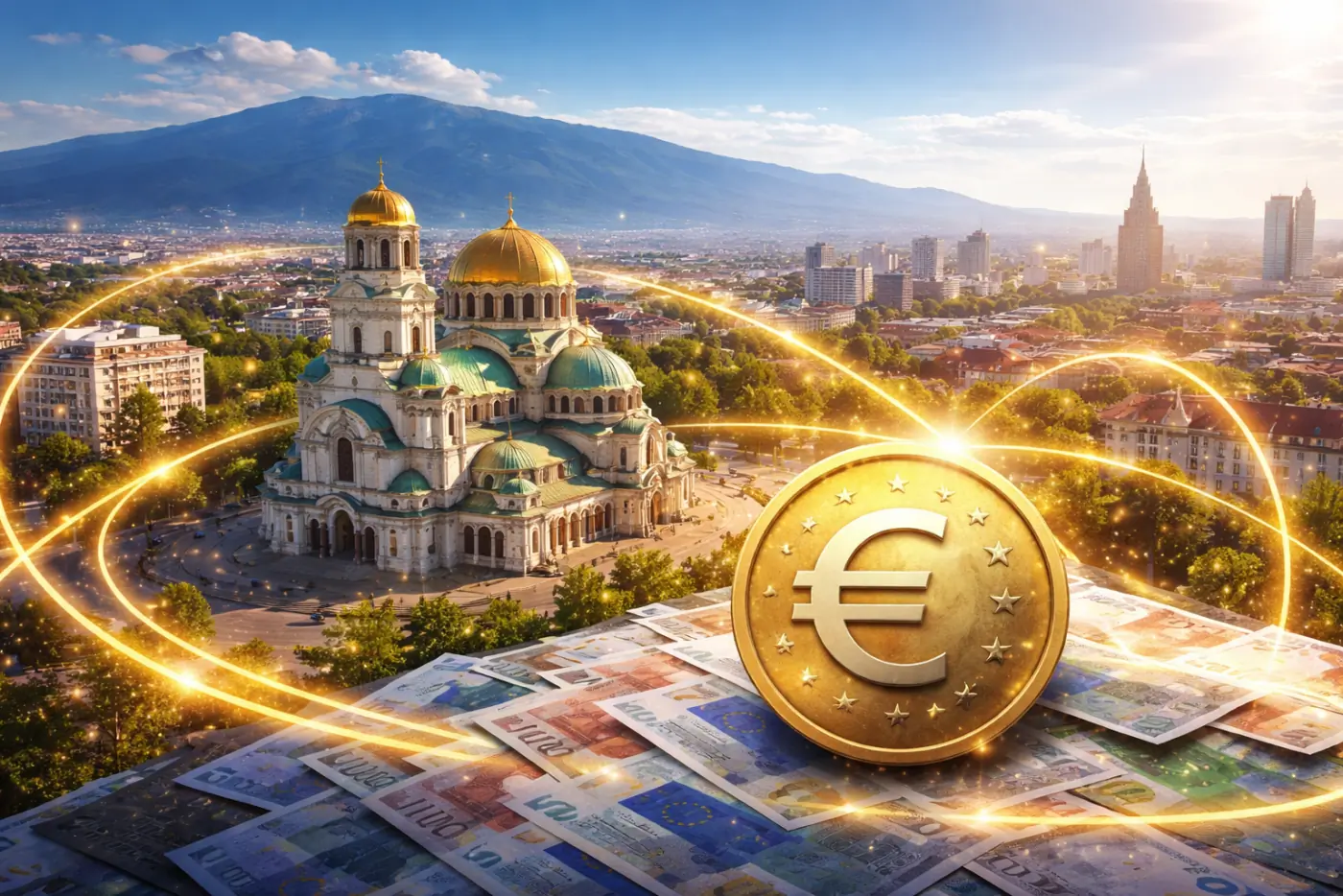
For anyone building, investing, hiring, selling, or scaling from Sofia, this is more than a monetary milestone. It’s a structural shift in how Bulgaria connects to European markets, how companies price and invoice, how foreign partners perceive risk, and how day to day financial operations run.
For French Tech Sofia’s community, there is also a symbolic layer. Many of us operate across borders, collaborate with teams and clients across the EU, and think in European terms when we raise capital, recruit talent, or choose where to locate a venture. Bulgaria’s euro entry makes that "European default" more concrete. The country is now both in the Schengen area with land border checks lifted from January 1, 2025, and in the euro area from January 1, 2026.
This article is designed as a practical guide. It covers what happened, what the transition rules mean in practice, where the real benefits come from, what risks and frictions to expect, and what every startup or scale up should check in the coming months.
- Table of Content
- The essentials. What happened and what the key dates mean
- Why euro membership matters even if the lev was already pegged
- What changes for startups and SMEs. The practical layer
- What to expect on the market side. Trust, inflation perception, and competition
- Why this is a strategic opportunity for Sofia’s ecosystem
- A practical checklist for founders and operators
- Closing thought
The essentials. What happened and what the key dates mean
Bulgaria’s euro adoption was formally approved in July 2025, including the irrevocable conversion rate. The rate was set at 1 EUR = 1.95583 BGN, which matches the lev’s ERM II central rate.
From a business operations perspective, three dates matter most:
- January 1, 2026. Euro adoption day The euro became the national currency, and euro cash entered circulation.
- January 2026. Dual cash circulation During January, both lev and euro cash could be used, but with a key rule: you could pay in lev, yet change was given in euros, which accelerated the withdrawal of lev cash. By the end of the dual cash period (January 31, 2026), euro banknotes and coins represented a large share of cash in circulation, indicating a fast cash changeover.
- August 8, 2025 to August 8, 2026. Dual price display Dual pricing in lev and euros became mandatory from August 8, 2025, and remains required until August 8, 2026. That dual display requirement isn’t just a retail topic. It touches SaaS, marketplaces, subscriptions, and any business communicating prices to consumers or small customers.
Why euro membership matters even if the lev was already pegged
A common reaction is: "the lev was already pegged, so what really changes?" It’s true that Bulgaria has lived for years with limited monetary flexibility due to the currency board arrangement and the long standing peg. The difference isn’t the peg itself. The difference is governance, credibility, and integration.
1. From rule taker to rule maker
As a euro area member, Bulgaria participates in euro area decision making. It gains representation in the ECB system and a voice in the policy framework that already influenced Bulgaria indirectly.
2. Lower friction for cross border business
The euro reduces currency conversion costs and removes residual exchange rate risk for transactions with euro area partners. This matters most for businesses that sell internationally, import services, or rely on foreign suppliers and contractors. It also improves price transparency.
3. Investor confidence and financing optics
Euro adoption typically strengthens the "institutional story" a country tells investors. The ECB itself highlights expected gains such as greater investor confidence, lower transaction costs, and deeper integration effects. In parallel, euro entry can simplify the narrative for funds that invest across Europe and prefer euro denominated risk, even when the underlying business is local.
What changes for startups and SMEs. The practical layer
For most tech companies, the euro transition isn’t a single switch. It’s a set of small changes across pricing, accounting, contracts, payroll, and customer communication. The companies that treat it as an operations project, with a checklist and an owner, will move through it with minimal noise.
Pricing and packaging
If you sell to consumers or small businesses in Bulgaria, you should assume customers will be extra sensitive to perceived price jumps during this year of dual display. That sensitivity isn’t theoretical. Public concern about inflation was a major theme during the run up, and Bulgaria introduced measures aimed at preventing unjustified price increases during the transition.
What to do in practice:
- Freeze your "psychological price points" early, then convert carefully using the official rate.
- Standardize rounding rules, and apply them consistently across web, app, invoices, and receipts.
- Document the logic internally so finance, support, and sales give the same explanation when asked.
- If you operate subscriptions, decide whether you keep the same euro price for everyone, or keep a Bulgaria specific price tier that reflects local purchasing power.
Invoicing, accounting, and reporting
From the start of 2026, core reporting and transaction values are expressed in euros, including items like invoices and tax related declarations in many contexts. For startups, the main risk isn’t the accounting theory. It’s systems drift. One team updates the checkout. Another team forgets the PDF invoice template. Someone exports a CSV for the accountant in the old currency. These are easy mistakes, but they waste time and create trust issues with customers.
What to do in practice:
- Audit every place a price appears: landing pages, paywalls, emails, invoices, terms, internal dashboards, CRM fields, exports.
- Update finance integrations: billing provider, accounting tool, ERP, payroll, expense management.
- Test edge cases: refunds, partial months, discounts, credits, prorations, chargebacks.
Contracts, loans, and commercial terms
If you have contracts drafted in lev, the year 2026 is when partners will start asking for clean euro references, especially in multi year agreements. In many cases, conversion is straightforward, but you should watch for:
- Threshold clauses and penalties that were sized in "round" lev amounts.
- Indexation or escalation clauses.
- Liability caps and insurance requirements.
A good rule: convert, then review whether the business meaning stayed the same.
Payroll and compensation
Even when your company bills internationally in euros already, payroll is where people feel currency changes personally. Many teams will have questions like: "Is my salary truly equivalent?" or "Why did the cents change?"
Treat this as a communication exercise:
- Share the official conversion rate.
- Explain rounding.
- Provide a one page FAQ for employees.
If you’re hiring internationally, euro denominated offers can also simplify comparisons for candidates moving from other EU markets, especially once the emotional uncertainty of the first months fades.
Payments and banking
In practice, euro adoption usually reduces friction for euro payments and can accelerate adoption of euro based rails and products offered by banks and payment providers. Some Bulgarian banks explicitly communicated that, after January 1, 2026, euro transfers domestically and to the EEA would be executed through euro payment schemes and options like SEPA and instant transfers, depending on bank offerings. For startups, the key is to recheck fees and flows, because pricing and product conditions can change when the "domestic currency" becomes EUR.
What to expect on the market side. Trust, inflation perception, and competition
Euro adoption has two parallel realities:
- The long term structural reality: Lower currency friction, clearer pricing, improved investor optics, tighter integration, and better alignment with European financial infrastructure.
- The short term behavioral reality: Consumers worry about price increases, and trust can be fragile, especially in a context of political turbulence and skepticism.
For tech companies, this means you should take pricing trust seriously in 2026. If you operate B2C or SMB, you should assume that a small perceived "rounding up" can become a support burden and a brand issue. The companies that explain clearly, show both currencies where required, and keep their messaging consistent will win trust cheaply.
Euro entry also increases comparability. That has a competitive effect. When prices are easily comparable across borders, some markets get more competitive. The upside is that Bulgarian companies can also sell abroad with less friction and fewer "mental conversion barriers" for customers.
Why this is a strategic opportunity for Sofia’s ecosystem
Sofia already has strong fundamentals: cost quality ratio, technical talent density, and a growing international founder population. Now add two integration accelerators:
- Full Schengen membership, which reduces mobility friction for talent and business travel across land borders inside Schengen.
- Euro area membership, which reduces currency friction and strengthens the "European operating model" for companies based here.
For founders, this combination can strengthen a simple thesis: build in Sofia with local execution strength, then scale across Europe with less administrative and financial friction than before.
For investors and corporate partners, it also clarifies the map. Bulgaria is now "fully inside" the two most visible EU integration layers that matter operationally: free movement and the single currency. That doesn’t solve every challenge. It does change the baseline.
A practical checklist for founders and operators
If you want a lightweight way to manage the changeover, assign an owner for two weeks and run this checklist:
- Conversion and rounding policy - Write it once, apply it everywhere, and train support on it.
- Pricing surface audit - Website, app, checkout, invoices, receipts, email templates, PDF exports, terms, sales decks.
- Systems and integrations - Billing, accounting, payroll, expense tooling, CRM, data warehouse fields.
- Contract review - Liability caps, thresholds, penalties, and multi year commitments.
- Customer communication - Short FAQ, proactive email for subscription customers, updated help center articles.
- Analytics continuity - Make sure your KPIs still compare month to month after the currency shift, especially for MRR, ARPA, churn cohorts, and CAC payback.
Closing thought
The euro doesn’t magically create growth, and it doesn’t remove the need for strong execution. What it does is remove a layer of friction and ambiguity. It tightens the connection between Bulgaria and the core economic infrastructure of the EU. It can make cross border collaboration a little simpler, investment conversations a little cleaner, and financial operations a little less noisy.
For the French Tech Sofia community, the message is practical: 2026 is the year to treat currency changeover as an operations project, and to treat euro membership as a credibility and market access asset. Teams that execute the transition cleanly will have fewer distractions, more trust with customers, and a clearer platform to scale across Europe.
Last updated on January, 17th 2026 at 10:12 AM.
Written in participation with:

French Tech Sofia
Official French Tech hub – NGO bridging together players in the French & Bulgarian #startup ecosystems #FrenchTechSofia